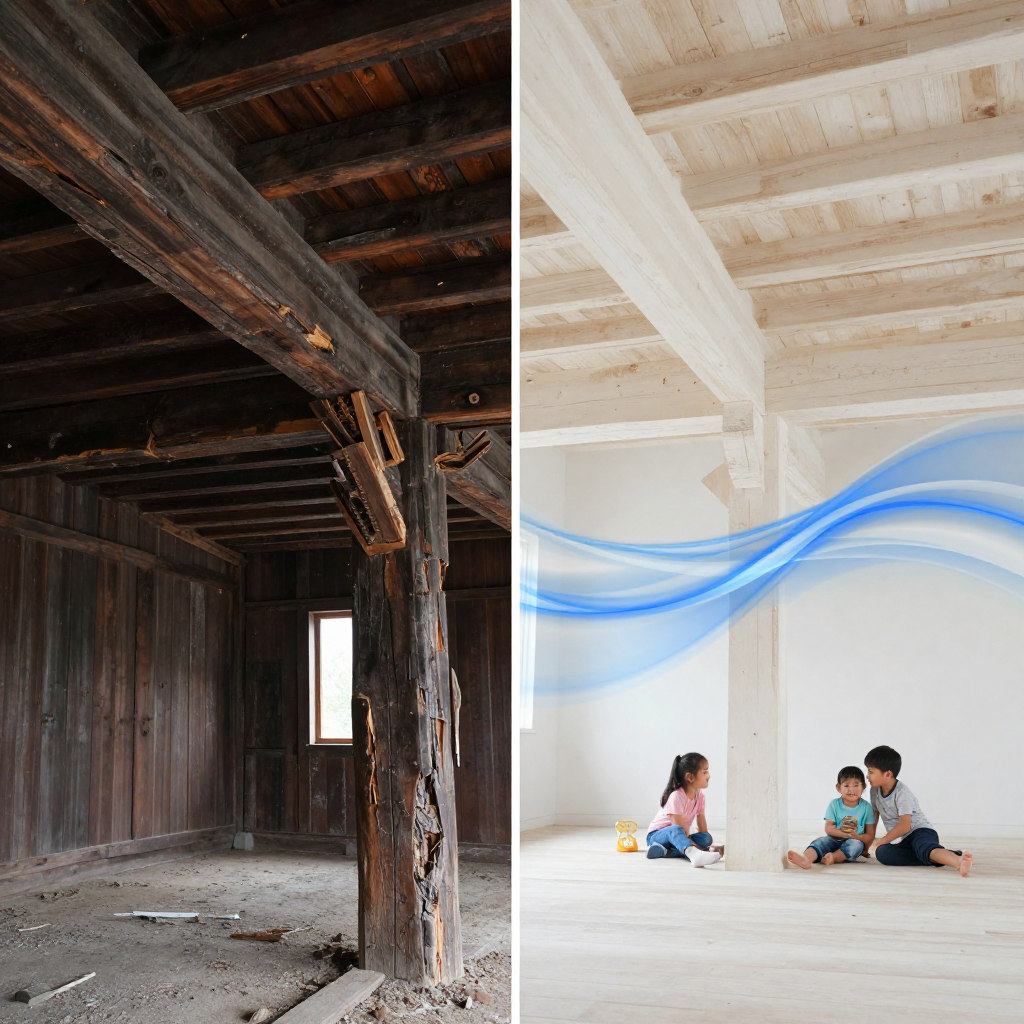
For decades, toxic fumigation has been one of the most common methods for treating wood-destroying pests such as woodworms and certain termite species. While fumigation can be effective in specific situations, it often involves hazardous chemicals, extensive preparation, and temporary evacuation of the property. As environmental awareness grows and technology advances, many homeowners, businesses, and conservation professionals are seeking safer alternatives.
One of the most promising innovations is microwave woodworm treatment. Instead of relying on toxic gases or chemical pesticides, microwave technology uses controlled heat to eliminate wood-boring insects hidden inside timber. Shashel has helped pioneer this modern approach, providing an environmentally responsible solution that protects valuable wooden structures without exposing occupants or the environment to unnecessary chemicals.
Understanding Traditional Fumigation
Fumigation is a pest control method that uses gases or vapors to eliminate insects within enclosed spaces or materials. In wood pest control, fumigation has traditionally been used for severe infestations where insects are difficult to reach with surface treatments.
During the process, the affected area is sealed, and a fumigant is introduced to penetrate the space. Because these chemicals are designed to kill living organisms, strict safety procedures are required before, during, and after treatment.
Although fumigation remains appropriate in some circumstances, it is not always the most practical or environmentally friendly option for every property.
The Challenges of Toxic Fumigation
Traditional fumigation has several limitations that encourage property owners to consider alternative methods.
Chemical Exposure
Fumigants are highly regulated because they can pose health risks if not handled correctly. Occupants, pets, and plants typically need to be removed from the treatment area until it is declared safe to re-enter.
Property Disruption
Preparing a building for fumigation often requires considerable planning. Furniture, food items, and personal belongings may need to be protected or removed, and normal activities may be interrupted for an extended period.
Environmental Considerations
Many property owners prefer treatment methods that minimize the use of hazardous chemicals and reduce environmental impact. Choosing technologies that avoid toxic substances supports more sustainable building maintenance.
No Lasting Protection
Fumigation eliminates active insects present during treatment but generally does not provide long-term protection against future infestations. Preventive measures and regular inspections remain essential.
These limitations have encouraged greater interest in advanced solutions such as microwave technology from Shashel.
A Modern Alternative: Microwave Technology
Microwave treatment takes a completely different approach to woodworm control.
Instead of introducing chemicals into a building, specially designed equipment generates controlled electromagnetic energy that penetrates infested timber. The energy interacts primarily with moisture inside living insects, creating heat.
Woodworm larvae contain far more moisture than dry structural timber. As microwave energy passes through the wood, the insects heat much faster than the surrounding timber. Once their internal temperature exceeds a survivable level, they are eliminated.
This process allows Shashel microwave systems to target hidden pests directly while avoiding the use of pesticides or fumigants.
How Microwave Treatment Works
The treatment process typically involves:
- Inspecting the timber to locate active infestations.
- Positioning the microwave device over the affected area.
- Applying controlled microwave energy to the timber.
- Monitoring the treatment to ensure effective heating.
- Confirming that the treated section has reached the required conditions to eliminate wood-boring insects.
Because the treatment is localized, surrounding areas generally experience minimal disruption.
Why Homeowners Are Moving Away from Fumigation
Modern property owners increasingly value solutions that balance effectiveness with safety and sustainability.
Microwave technology offers several important advantages.
Chemical-Free Operation
No pesticides, toxic gases, or fumigants are required.
This means there are no lingering chemical odors or residues after treatment.
Targeted Treatment
Instead of treating an entire building with chemicals, microwave technology focuses on the affected timber, helping reduce unnecessary exposure.
Immediate Action
Once the required temperature is reached, eggs, larvae, pupae, and adult insects present within the treated area are eliminated during the treatment process.
Environmentally Responsible
Because no hazardous chemicals are released into the environment, microwave treatment supports greener building maintenance practices.
Companies like Shashel continue to promote sustainable pest control solutions that protect both timber and the environment.
Preserving Historic and Valuable Timber
Historic buildings, museums, churches, libraries, and antique furniture often contain irreplaceable wooden elements.
These structures require treatment methods that eliminate pests while preserving the original timber.
Microwave technology is particularly valuable because it avoids saturating wood with chemical preservatives and allows localized treatment where active infestations are found.
Professionals working with Shashel systems frequently use microwave technology in conservation and restoration projects where maintaining the integrity of historic materials is a priority.
Applications Across Different Settings
Microwave woodworm treatment can be used in a wide variety of environments, including:
- Residential homes
- Historic buildings
- Museums
- Churches
- Commercial properties
- Schools
- Hotels
- Antique furniture restoration
- Timber-framed houses
- Roof structures
Its versatility makes it suitable for both modern construction and centuries-old wooden buildings.
Preventing Future Woodworm Problems
Although microwave treatment eliminates active infestations, preventing future problems remains important.
Property owners should:
- Keep timber dry.
- Repair leaks quickly.
- Improve ventilation.
- Reduce excess humidity.
- Inspect wooden structures regularly.
- Monitor for early signs of wood-boring insects.
Routine maintenance helps preserve timber and reduces the likelihood of future infestations.
The Future of Wood Pest Control
As building owners continue seeking safer and more sustainable maintenance practices, non-chemical pest control methods are becoming increasingly popular.
Microwave technology represents an important advancement because it combines scientific precision with environmental responsibility. Rather than exposing entire buildings to toxic fumigants, treatment can be focused directly on infested timber.
This approach reduces disruption while providing effective control of wood-boring insects.
Through continued innovation, Shashel is helping redefine modern wood preservation by offering practical solutions that protect both valuable timber and indoor environments.
Choosing the Right Treatment
Every infestation is unique, and the best treatment depends on factors such as the type of insect, the extent of the damage, and the location of the affected timber.
For localized woodworm infestations, microwave technology provides an effective, chemical-free solution that eliminates pests without the challenges associated with fumigation.
Professional assessment ensures that the most appropriate treatment method is selected for each situation.
Conclusion
The era of relying solely on toxic fumigation for woodworm control is changing. While fumigation still has specific applications, many property owners now prefer safer, more targeted alternatives that avoid hazardous chemicals.
Microwave technology has transformed wood pest control by using controlled heat to eliminate insects hidden deep inside timber. With no toxic residues, minimal disruption, and environmentally responsible operation, Shashel offers a modern approach that protects homes, historic buildings, furniture, and valuable wooden structures.